Introduction
Guitar effects pedals can be a ‘black box’ to many that use them - especially if you’ve haven't had much exposure to (or simply don’t care about) electronic circuits. For one reason or another, however, you’ve decided that you want to know how they work, how to use them, or how to make them. To this end, I have put together this guide in the hopes that it might be able to help a few curious folks.
I've been documenting things as I’ve been learning them myself, and so I hope this becomes a useful tool from the perspective of a fellow beginner! We’ll have a look at how pedals manipulate the output signal from your guitar, what happens when you twist the knobs and flip the switches, and how to design and build your own pedals from scratch.
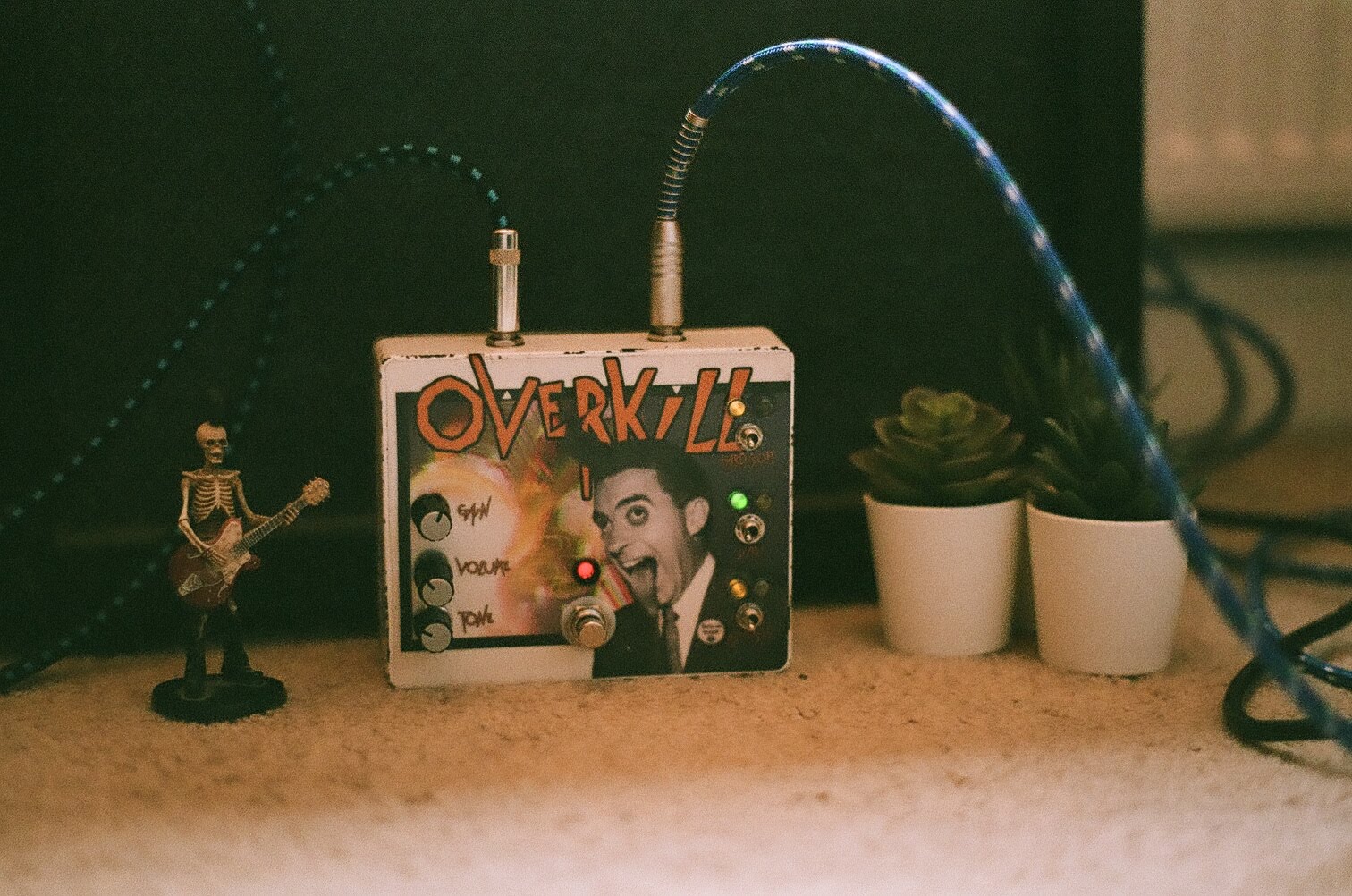
Of course, a guide is made to be followed, but I highly encourage you taking some time to experiment! We'll walk through concepts, circuits, and sounds, but at the end of the day, you know what you’re looking for better than I do. Once you understand how the components are interacting with one another and with your guitar, you should be able to tailor the pedals you pick or the pedals you make to achieve a sound that you're happy to call your own.
I want to clarify that I will be assuming a certain level of understanding throughout this guide. As long as you have a decent grasp of the following, you should be good to go!
- Electrical circuit schematics and symbols. The below image should serve as a refresher or a good reference point.. There are a lot of symbols, and they're all good to know when you want to explore the possibilities, but I've highlighted the most commonly seen in the basic circuits we'll start looking at in the next few pages.
- Fundamental electronics concepts (voltage, current, resistance...). This page should serve as a handy reference point for a range of topics.
- Basic wave theory (frequency, period, amplitude...). This page is a helpful resource that runs over all the fundamentals, and should get you going.
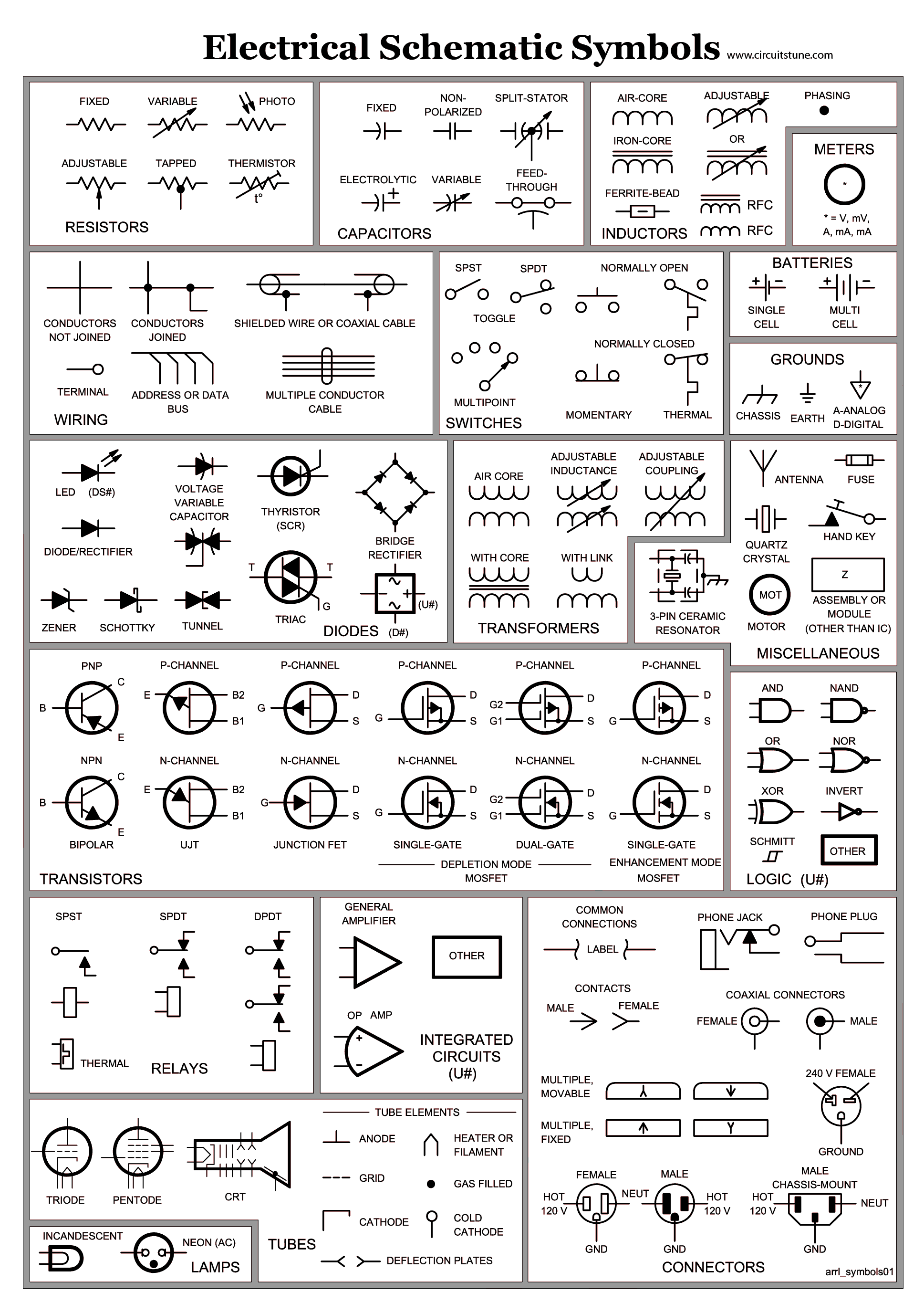
Image Credit: www.circuitstune.com
If you feel that you aren’t so comfortable in some of these areas, I’d recommend familiarising yourself before moving forwards. The Useful Online Resources section will provide some more places to go for extra guidance. Now as a quick disclaimer - I’m no expert. I’m itching to learn more about all of this, and I’d love to learn alongside you! If you have any questions, corrections, improvements, jokes: please send them my way at rdeh10@googlemail.com. I’d be very happy to hear from you!